
Balancing the Brutality of War and Entertainment: Narrative Ethics in WWII Games
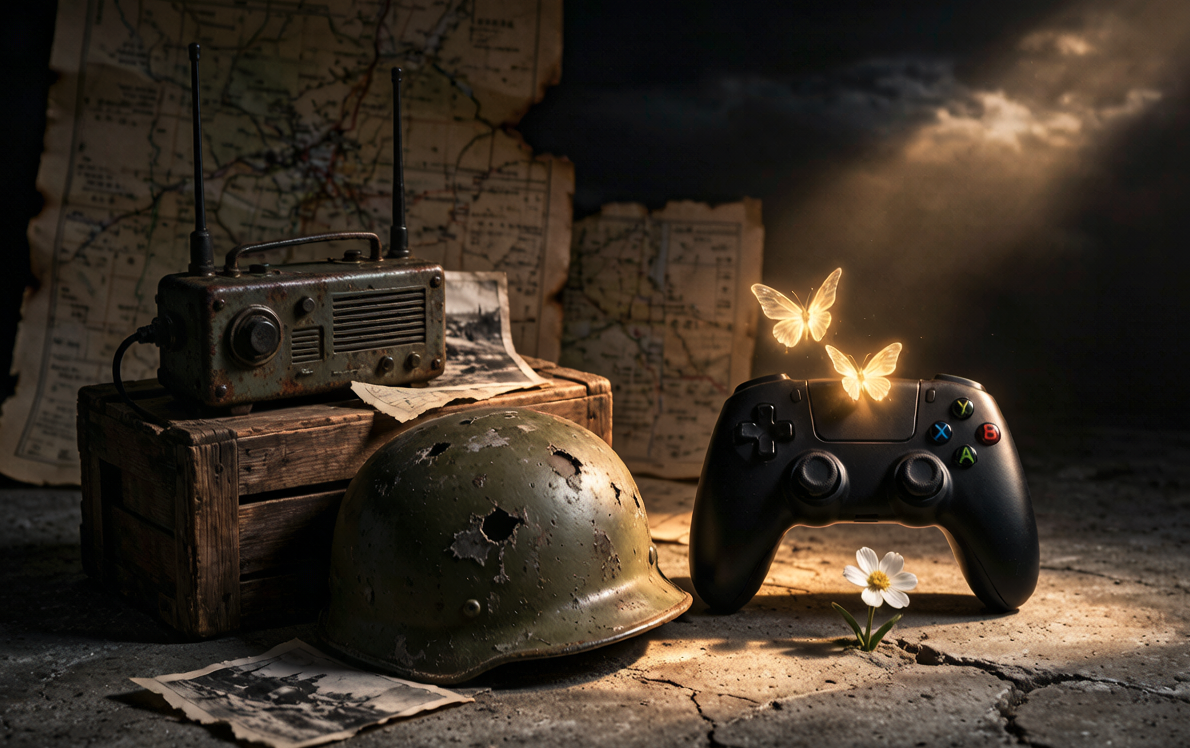
WWII games face a unique ethical challenge: how to be engaging and fun while doing justice to the deadliest conflict in human history. The most successful titles refuse to glorify war — and prove that ethical engagement and compelling gameplay can coexist.
Introduction
World War II games have long occupied a difficult space in entertainment. They are among the most popular settings for shooters, strategy games, and narrative adventures, yet they depict the deadliest conflict in human history. This creates a fundamental ethical tension: how do you make a game that is engaging and fun while also doing justice to the suffering and sacrifice of real people?
The answer is not a simple formula. It requires careful attention to perspective, mechanics, and responsibility. The most successful WWII games navigate this tension by refusing to glorify war while still offering compelling gameplay.
The Core Tension: Fun vs. Reality
The ethical problem at the heart of WWII games is straightforward. War is not fun. It is brutal, senseless, and dehumanising. Games, by contrast, are designed to be enjoyable, rewarding, and empowering. When a player is having fun storming a beach or liberating a village, they are essentially finding pleasure in a simulation of mass violence.
This is not an abstract concern. Research on war games has shown that they often present a "clean war" in which civilians rarely appear, violence is sanitised, and the focus is on weapon technology and tactical problem-solving rather than human cost. Players may come to believe that genuine war looks like the one on the screen — precise, controlled, and lacking in visceral horror.
Yet the reality of World War II was anything but clean. It was characterised by atrocities, civilian suffering, and the systematic murder of millions. A game that ignores this reality is not just historically shallow — it risks trivialising the very events it claims to depict.
Narrative Strategies for Ethical Engagement
Over the years, developers have developed several strategies for acknowledging the brutality of war while still creating engaging gameplay. These approaches share a common thread: they shift the focus away from tactical spectacle and toward human experience.
First-Person Testimony and Character Empathy
One effective approach is to focus on characters rather than tactics. Games that centre on individual experiences — especially those of civilians or non-combatants — can generate empathy without requiring players to enjoy violence.
The Light in the Darkness, for example, follows a Jewish family in Nazi-occupied France. The game does not have a "Hollywood ending"; it shows the reality that most Jews during the Holocaust were murdered. By focusing on the human dimension rather than combat, the game creates emotional engagement without glorifying violence.
Similarly, My Child: Life-Born places players in the role of a caregiver for a child born from the Lebensborn program — one of the "German blood" children who faced discrimination and abuse in post-war Norway. The gameplay is not about winning battles but about making ethical choices about how to protect a vulnerable child from prejudice and violence.
The Light in the Darkness has reached audiences well beyond traditional educational settings, with the average player age of 35, and has resonated more with players than even movies around the Holocaust. This suggests that games can foster deep engagement with difficult history when they prioritise human connection over spectacle.
The Child's Perspective
Another powerful narrative strategy is to view war through the eyes of a child. The Long Road Home places players in the role of a young girl named Asya, who must travel across war-torn Eastern Europe to return home during the Second World War.
The game does not ask the player to be a hero. Asya cannot fight. She must hide, run, and survive. Her perspective reveals the helplessness and fear that war inflicts on the most vulnerable. The game's mechanics reinforce this: her "companion" is an imaginary friend (a glove she speaks to), and her growth throughout the journey is not about becoming a warrior but about learning to endure loss and loneliness.
When players see war through the eyes of those who cannot fight back, the reality of its cruelty becomes unavoidable.
Counterfactual Distance
Some games use fictionalised settings to create what researchers call a "safe distance" for players to engage with difficult historical questions. The Valkyria Chronicles series, for example, reimagines World War II in a fictional European setting with fantasy elements.
This strategy allows developers to explore themes of extreme nationalism, sacrifice, and the morality of war without directly representing real atrocities or real victims. One academic analysis argues that Valkyria Chronicles 4 departs from conventional Japanese narratives of the war, offering a perspective that allows players to reconsider entrenched national narratives while maintaining a safe distance from the historical trauma.
The limitation of this approach is that it can also create distance from historical reality, potentially allowing players to engage with war as an abstract concept rather than as a historical event with real human consequences.
The Question of Agency and Responsibility
One of the most fraught questions in Holocaust and WWII game design is interactivity. There is a fear that if players can "change" historical outcomes, they might trivialise the past or gain a misleading sense of agency over events that were anything but controllable.
Professor Victoria Grace Richardson-Walden, Director of the Landecker Digital Memory Lab at the University of Sussex, addresses this directly: "Anyone in the gaming industry understands that is an illusion of agency. You can't change the narrative."
This is an important distinction. Interactive experiences can allow players to experience history without allowing them to rewrite it. The emotional impact comes from immersion in the constraints and choices of a historical context, not from altering its outcome.
When Games Go Wrong: The Risks of Glorification
Not all WWII games navigate these tensions carefully. Some have been criticised for focusing on military technology and tactics while ignoring the human cost. Others have faced more serious ethical problems.
The community around some war games has struggled with players forming "clans" named after historical SS divisions and arguing that they were "only re-enacting their idols' campaigns" without sharing their racist ideology. This kind of engagement treats a genocidal organisation as a source of entertainment, effectively sanitising its crimes.
This is a failure of both narrative and community management. When a game allows or implicitly encourages players to identify with the perpetrators of atrocities, it crosses a clear ethical line.
The Bottom Line
There is no single solution to the challenge of balancing historical gravity with entertainment. The most ethical WWII games share several characteristics.
Conclusion
Ultimately, the question is not whether a WWII game can be fun. It is whether the fun comes at the expense of the truth. The best games in this genre prove that entertainment and ethical engagement are not mutually exclusive — they just require care, research, and a commitment to representing the past with the seriousness it deserves.
Explore on Olgjoy Games
Ready to play? Browse free HTML5 games or read more guides.
More to read

From Simple Rumble to True Haptics: The Evolution of Vibration Feedback in Game Controllers
What started as a crude "on/off" rumble has evolved into a subtle language of touch — modern haptic systems can simulate texture, weight, and even individual raindrops. Tracing this evolution shows how hardware, software, and design philosophy transformed controller feedback from a gimmick into a core part of the play experience.
Magic Consumption Mechanics in Games: Mana, Stamina, and Sacrifice Systems Compared
Magic consumption mechanics define how spellcasters pay for their power. From Mana pools to Backlash risks and Magic Slot preparation, each approach shapes tactical decision-making and player psychology in distinct ways.
Historical Accuracy vs. Gameplay: The Art of Compromise in Historical Games
Historical games carry the weight of representing real people, events, and cultures — yet they must also be fun. How developers navigate the tension between authenticity and playability, and why "believable" matters more than "accurate."
How Horror Games Are Using Sound Tricks and Visual Lies to Mess With Your Head
The most terrifying games today don't just make you jump — they make you question everything you hear and see. Audio puns and environmental misdirection are becoming the foundation of modern fear.