
How Horror Games Are Using Sound Tricks and Visual Lies to Mess With Your Head
The most terrifying games today don't just make you jump — they make you question everything you hear and see. Audio puns and environmental misdirection are becoming the foundation of modern fear.
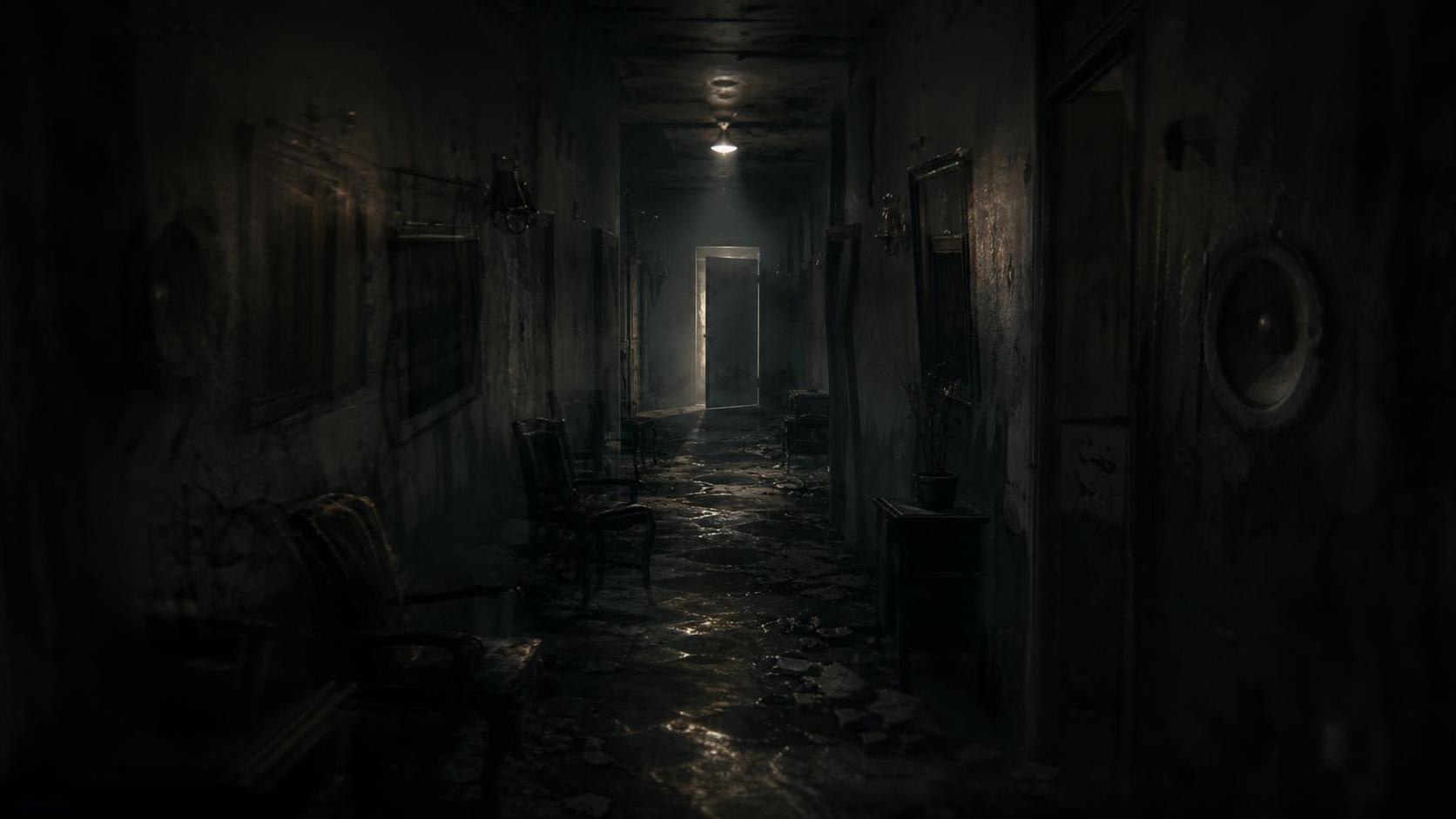
What Actually Is an Audio Pun?
Horror games have always relied on a simple formula: something jumps out, you scream, you move on. But the genre has evolved. The most terrifying games today don't just make you jump — they make you question everything you hear and see.
Two techniques are pushing psychological horror forward: audio puns — sounds that could mean multiple things, deliberately messing with your head — and environmental misdirection — using the game world to set up false expectations. And the horror lineup of 2026 proves these aren't just clever tricks. They're becoming the foundation of modern fear.
Let's clear this up first. An "audio pun" isn't a joke. It's a sound that could be one thing, but might also be something else entirely. Your brain hears a creak and assumes it's a floorboard settling. But what if it's a footstep? What if it's both? What if you're never sure?
One of the smartest uses of this idea comes from Pineview Drive, a psychological horror game where the sound design deliberately manipulates player behaviour. The game plays various sounds — piano notes, shifting marble busts, creaking wooden figures, growls, rumbles, even a faint "psss". Here's the catch: if you turn to investigate the source, the game deducts points from your sanity level.
Think about that for a moment. The game trains you to pay attention to sounds — that's how you survive. Then it punishes you for doing exactly that. You hear something in the next room. You want to check. But checking means losing sanity. So you sit there, heart racing, telling yourself it was probably nothing. And that uncertainty — that inability to know for sure — is way more terrifying than any monster could ever be.
The Gaslighting Approach
The Mound: Omen of Cthulhu, set for release in July 2026, takes this concept to another level. The game has no HUD. No sanity meter. Your own perception becomes the mechanic.
As your character's mental state deteriorates, the environment quietly shifts. The jungle might start bleeding, but only you can see it. Your teammates, if you're playing co-op, can't see anything unusual. The game also generates auditory hallucinations — a distant horn that sounds like an extraction signal, or a teammate's voice calling for help from somewhere in the dark. You follow it, only to realise too late that your own mind has just led you straight into a trap.
The worst part? Under extreme psychological pressure, your teammates' character models can warp into undead monsters. In the middle of a chaotic firefight, you spin around and unload on what looks like a shambling horror — only to discover you've just killed your friend.
This isn't just a cheap scare. It's audio and visual misdirection working together to create genuine paranoia. The game doesn't tell you when you're losing it. It shows you things that aren't there and lets you figure it out on your own. By the time you do, it's usually too late.
When the World Lies to You
Beyond audio, modern horror games are using the environment itself to mess with players. You learn the rules of the world, and then the world breaks those rules.
Abismo, another upcoming psychological horror title, builds its entire narrative around this idea. The game adapts its difficulty and narrative pressure based on player decisions. If you choose to preserve certain photographs, the next loop changes completely — lighting, hallucinations, dialogue tone, even puzzle guidance. In easier states, the narrator sounds comforting. In harder states, he becomes impatient, insulting, and emotionally abusive.
The result is a world that feels like it's reacting to you personally. It's not just a haunted house. It's a haunted house that knows what you're thinking. And when the environment itself starts to turn against you — when the layout of a room subtly shifts or an object appears where it definitely wasn't before — you stop feeling safe anywhere. There's no "safe room" mentality. Even the ground under your feet feels unreliable.
The Glitch Music Trick
There's another layer to this: what scholars call "glitch music" — using distorted, corrupted, or "broken" sound to create unease. This relies on "defamiliarisation" — taking something familiar and making it feel wrong.
Doki Doki Literature Club is a textbook example. The first act uses cheerful, innocent music in C major — the key of "innocence, simplicity, and naivety". Then, as the game reveals its true nature, those same tracks are pitch-shifted, reversed, slowed down, and twisted. You recognise the melody — you know what it's supposed to sound like — but it's wrong. That cognitive dissonance is deeply unsettling.
One analysis puts it well: "The player can believe that they are well‑versed and equipped to handle what the game will throw at them, and then be completely caught off guard by a series of glitches that interrupt their preconceptions". The same idea applies to audio puns. You hear a sound you think you understand. Then you second‑guess it. Then you panic.
When Silence Says More Than Sound
It's worth noting that sometimes the most effective audio design is the absence of sound.
Research by Grimshaw‑Aagaard highlights the "defamiliarisation of a mundane sound" — taking something ordinary and stripping it of context, or placing it in the wrong context, to create dread. Case File: Archived, a psychological horror game set in a Kolkata home, deliberately avoids overwhelming players with constant jump scares. Instead, the house is rarely completely silent — but the sounds are subtle. Distant city noise. The hum of appliances. Soft floor creaks. You hear something, you're not sure what it is, and you start questioning whether you heard anything at all.
That uncertainty is the heart of psychological horror. It's not about being loud. It's about making you doubt your own senses.
Why It All Works
The most effective horror games don't just scare you — they make you scared of your own brain. That's what audio puns and environmental misdirection achieve.
When you can't trust your ears, you start second‑guessing everything. When the environment lies to you, you stop feeling safe anywhere. And when the game doesn't give you a clear HUD or sanity bar, you can't even tell when you're losing it until it's too late.
Games like The Mound and Abismo are pushing these boundaries further than ever before. But the core principle remains unchanged: the scariest thing a game can do is make you doubt your own perception.
Because once you can't trust your ears — or your eyes — the real horror is already inside your head.
Explore on Olgjoy Games
Ready to play? Browse free HTML5 games or read more guides.
More to read

Retro Turn-Based Tactics: Innovation and Compromise in Modern Design
Developers keep going back to the 1990s for inspiration, but they're not just copying — they're adapting. Here's what works, what doesn't, and what the next decade holds for the genre.

Interactive Dynamic Music Systems: How Game Scores Adapt to Your Every Move
From vertical layering to horizontal resequencing, adaptive game music has quietly become one of the most sophisticated systems in modern game design. Here's how it works.

The Systematic Use of Color Psychology in Game Atmosphere Design: Warm vs. Cool
Color is the silent architect of a game's emotional landscape. From the angry reds of battle to the isolating blues of dread, here's how developers use color psychology to shape your experience.

The evolution of building styles in games: from the practicality of pixel blocks to the pursuit of purely decorative aesthetics
From crude pixel blocks to sprawling photo-realistic cities, the evolution of video game architecture tells a story about technology, ambition, and how we connect with virtual worlds.