
Historical Accuracy vs. Gameplay: The Art of Compromise in Historical Games
Historical games carry the weight of representing real people, events, and cultures — yet they must also be fun. How developers navigate the tension between authenticity and playability, and why "believable" matters more than "accurate."
Introduction
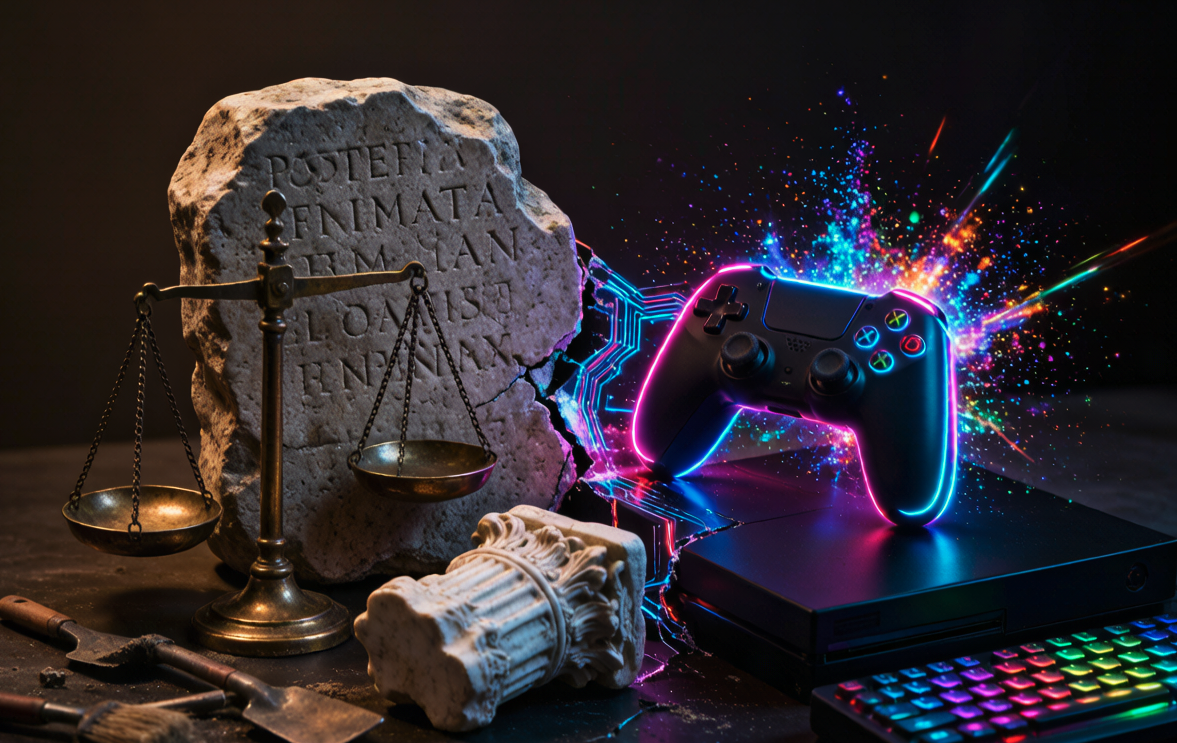
Historical video games occupy a strange and often uncomfortable space. They are entertainment products, designed to be played and enjoyed. Yet they also carry the weight of representing real people, events, and cultures. When these two goals pull in opposite directions, developers are forced to make difficult choices. The result is never a perfect solution — only a series of thoughtful compromises.
The Fundamental Tension
At its core, the conflict between historical accuracy and gameplay is straightforward: history is messy, complicated, and often deeply un-fun to experience firsthand. Games, by contrast, are designed to be engaging, responsive, and player-driven. The challenge lies in finding a point where these two realities can coexist.
As one developer put it, historians have the luxury of being able to say "I don't know," but when you're creating a world, you can't say that. You have to make a choice. That choice is rarely about right versus wrong — it is about what serves the experience.
Thierry Noël, a historian who works with Ubisoft, describes his team's guiding principle as building a "believable world." The key insight is that "authentic" does not mean "completely accurate." A game can feel historically grounded without being a perfect reconstruction. In fact, chasing perfect accuracy can actively undermine the experience.
What Gets Compromised — and Why
The compromises developers make fall into several recurring categories. Understanding these patterns helps explain why even the most historically committed studios make the choices they do.
Gameplay Mechanics vs. Historical Reality
Kingdom Come: Deliverance offers a particularly clear example. The game's developers deliberately softened the severity of its criminal justice system. In 15th-century Bohemia, a peasant like the protagonist Henry would face brutal punishments — mutilation, exile, or execution — for relatively minor offences. But if the game enforced this, players would constantly find themselves locked out of the experience through no fault of their own.
Instead, the game translates historical consequences into fines, imprisonment, or banishment — severe enough to maintain a sense of consequence, but not so punishing that they destroy the player's investment.
Historical Detail vs. Player Enjoyment
Even the most committed studios make concessions to player psychology. Warhorse Studios' historians researched everything from sheep colours to carrot varieties. As one designer admitted, most people don't know the difference. The research still mattered, though — not because players could identify every detail, but because the more details you miss, people can begin to smell the inaccuracy. They don't know what it is exactly, but they begin to get an idea of what looks real and what doesn't.
This tension extends to world design. Fast travel, visual player guidance, and simplified dialogue trees are all concessions to playability. They are also departures from historical experience. A medieval traveller could not teleport across Bohemia. But a game without fast travel would be tedious for most players.
Case Studies in the Balancing Act
Three very different projects illustrate how developers navigate the accuracy-gameplay spectrum, each arriving at a different equilibrium point.
Kingdom Come: Deliverance — The Gold Standard
Warhorse Studios has become the benchmark for historically grounded game design. The studio employs an in-house historian and consults external experts extensively. They reconstruct topography, urbanism, sacred architecture, clothing, and even ethical and cultural patterns of everyday life.
Yet the final product is not a simulation. It is a game that wears its research lightly. Fictional characters and stories are woven into the gaps in the historical record. Those gaps are essential — they provide the space where player agency can exist without contradicting known facts.
Assassin's Creed — Embracing the Fiction
Ubisoft's Assassin's Creed series takes a radically different approach. It adds a fictional layer to the entire historical narrative — the millennia-long conflict between the Assassins and the Templars, who allegedly shaped most major historical events. This is a deliberate strategy: by introducing a secret history, the game can rewrite events without undermining the player's sense that they are engaging with real history.
The result is a world where Leonardo da Vinci is a weapons designer, George Washington may be a tyrant, and Grigori Rasputin is a Templar. History is recognisable, but it has been bent to serve the demands of the story and the gameplay.
The Struve Geodetic Arc Game — Accuracy as Education
A mobile game developed to raise awareness of a UNESCO World Heritage site adopted an even more research-intensive approach. The developers balanced historical content with engaging gameplay through a careful production process, though they noted that the time and resources devoted to historical research significantly impacts developers' decisions.
The project also revealed varying degrees of interest in historical accuracy within the development team — a reminder that not every developer is equally committed to historical authenticity.
Why Authenticity Matters to Players
Despite all the compromises, research consistently shows that players care about historical authenticity. A study by Dr. Jacqueline Burgess found that historical authenticity is critical to players. They don't like history being tampered with and expect developers to do their homework and not distort the facts unless it's necessary.
There is a paradox here. Players want accuracy, but they also want fun. When these goals clash, players often tolerate departures from accuracy — provided the departures are transparent and serve a clear purpose. A game that is historically inaccurate without a good reason feels lazy. A game that is historically inaccurate for the sake of better gameplay is much easier to forgive.
The Limits of Accuracy
There is a broader question that developers must confront: what does "accurate" even mean in a game context? A scenario designer for historical wargames once observed that there is no such thing as a totally historical recreation. No one knows where every tree and shell hole were on the battlefield, or how many rounds of ammo each unit had, or the names of all the tank commanders.
The best a designer can do is get as close as you can based on the information that you have and flavour it enough to make it fun. This recognition — that accuracy is a gradient, not a binary — allows for more productive conversations about what a historical game should be. It shifts the question from "is this accurate?" to "does this feel authentic?"
The Bottom Line
There is no single rule for balancing historical accuracy and gameplay. Every project must find its own equilibrium. Some games, like Kingdom Come: Deliverance, strive for maximum authenticity and make only necessary concessions to playability. Others, like Assassin's Creed, embrace historical fiction and use the game's narrative framework to explain its departures from fact.
The Struve Geodetic Arc mobile game, meanwhile, prioritises educational value while still maintaining engaging mechanics. But all successful historical games share one thing: they take the past seriously. They do research, they make decisions, and they communicate those decisions to the player.
When the tension between accuracy and playability becomes unavoidable, they choose thoughtfully — and they explain why. Because in the end, what matters most is not whether a game is perfectly accurate. It is whether the player leaves with a sense that they have touched something real.
Explore on Olgjoy Games
Ready to play? Browse free HTML5 games or read more guides.
More to read

From Simple Rumble to True Haptics: The Evolution of Vibration Feedback in Game Controllers
What started as a crude "on/off" rumble has evolved into a subtle language of touch — modern haptic systems can simulate texture, weight, and even individual raindrops. Tracing this evolution shows how hardware, software, and design philosophy transformed controller feedback from a gimmick into a core part of the play experience.

Magic Consumption Mechanics in Games: Mana, Stamina, and Sacrifice Systems Compared
Magic consumption mechanics define how spellcasters pay for their power. From Mana pools to Backlash risks and Magic Slot preparation, each approach shapes tactical decision-making and player psychology in distinct ways.
Balancing the Brutality of War and Entertainment: Narrative Ethics in WWII Games
WWII games face a unique ethical challenge: how to be engaging and fun while doing justice to the deadliest conflict in human history. The most successful titles refuse to glorify war — and prove that ethical engagement and compelling gameplay can coexist.
How Horror Games Are Using Sound Tricks and Visual Lies to Mess With Your Head
The most terrifying games today don't just make you jump — they make you question everything you hear and see. Audio puns and environmental misdirection are becoming the foundation of modern fear.