
Video Games as the Ninth Art — Which Museums Are Preserving Gaming History?
A growing number of museums around the world are taking video game preservation seriously — from MoMA and The Strong to China's first dedicated game museum. Here's how they're saving gaming history.
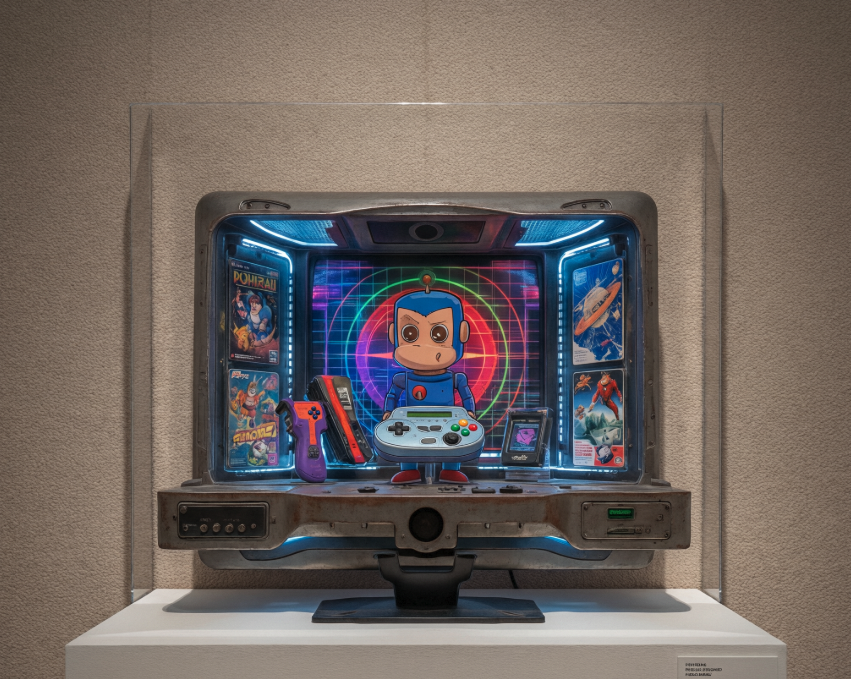
The Strong National Museum of Play — The American Leader
The debate about whether video games are "art" has been going on for years. But lately, that argument has quieted down. Instead, a more pressing question has taken its place: how do we actually preserve them?
Unlike a painting or a statue, a video game is fragile. It lives on physical media that decays. It runs on hardware that becomes obsolete. It often depends on servers that can be shut down without warning. Preserving a game isn't just about putting a cartridge on a shelf. It means saving the code, the hardware, the context, and even the experience of playing it. A growing number of museums around the world have taken on this challenge, each with their own approach.
In Rochester, New York, The Strong National Museum of Play is one of the most important institutions for video game preservation anywhere. Despite the playful name, its collection is serious.
The museum runs the World Video Game Hall of Fame, which recognises games that have had a lasting impact. The criteria are strict: icon status, longevity, geographical reach, and influence on other games and culture. Inductees range from Pong and Space Invaders to The Legend of Zelda, Super Mario Bros., and Pokémon Red/Green.
But the Hall of Fame is just the public face. Behind the scenes, The Strong houses over 5,000 objects related to video games, including arcade cabinets, development materials, and original source code. It's an active archive that collects design documents, concept art, and even physical props from studios like Volition — the team behind Saints Row and Red Faction.
MoMA — When the Art World Took Notice
In 2012, New York's Museum of Modern Art made waves by adding 14 video games to its permanent Architecture and Design collection. It was a controversial move at the time. But Paola Antonelli, the museum's senior curator, was clear: "Are video games art? They sure are, but they are also design."
MoMA's approach focuses on games as interaction design. They evaluate games based on four criteria: behaviour, aesthetics, space, and time. The collection includes classics like Pac-Man (1980), Tetris (1984), The Sims (2000), Portal (2007), and Dwarf Fortress (2006). Some games, like SimCity 2000 and Myst, are only shown as video demonstrations because they're too complex to display interactively.
Crucially, MoMA doesn't just collect cartridges. They actively pursue the source code to make sure games can be transferred to future platforms when the original hardware becomes obsolete. It's a forward-thinking approach that recognises game preservation isn't about freezing a moment — it's about keeping the game playable for future generations.
The National Videogame Museum — Building a UK Archive
Based in Sheffield, the National Videogame Museum (NVM) is the UK's first dedicated museum for video game culture. It holds over 5,000 objects, but its ambitions go beyond display.
In early 2026, the NVM launched "Behind the Screens" — the UK's first national archive of video game design, backed by the British Film Institute's Screen Heritage Fund. The project aims to survey game materials held by development studios and create a networked national archive.
The museum takes a dual approach. They maintain dozens of arcade machines from the industry's early days, but they also curate developers' notes and downloadable content that's no longer available to consumers. As one staff member put it, the job involves "screwdrivers and servers." The museum also plans to collect oral histories from players, recognising that the experience of gaming is part of the heritage.
China's First Professional Video Game Museum
In July 2024, China opened its first professional video game museum in Shanghai, under the guidance of the China Audio-Video and Digital Publishing Association. It houses over 5,000 items across four exhibition areas: "The Origins of Electronic Games," "The Rise of Console Games," "The Prosperity of Computer Games," and "The Development of Chinese Games."
The collection ranges from the world's earliest home console — the Magnavox Odyssey — to rare Chinese-made consoles from the 1980s, like the Shanghai Chunlei Electronic Instrument Factory's "TV Game Console" and the Xi'an Xinwu Hardware and Electrical Factory's "Computer TV Game Console." There's also a section dedicated to devices many Chinese players grew up with: electronic dictionaries like the Wenquxing and the Xiaobawang learning machine, both of which doubled as game devices.
The museum runs a "Treasure Hunt Program" that invites the public to donate games, magazines, and personal stories — recognising that video game history isn't just about hardware, but about memories.
MO5 — Europe's Largest Collection
In December 2025, the French association MO5 opened its Video Game Museum in Paris, with a collection of over 70,000 items. That makes it one of the largest video game collections in Europe.
The museum's mission rests on three pillars: conservation, transmission, and research. Its 1,200 square metres of permanent exhibition space cover the history of computing and video games from the 1950s to today, with over 140 playable machines — consoles, arcade terminals, and PCs — available for visitors. MO5 is also a founding member of the European Federation of Video Game Archives, Museums and Preservation Projects, connecting it to a network of major institutions across Europe.
Germany's Government-Backed Archive
Germany has also made significant efforts. In 2018, it was announced that a new museum would be created with government funding, combining the collections of the Computer Game Culture Foundation, the Berlin Computer Game Museum (the world's first dedicated game museum), and the University of Potsdam's Digital Games Research Centre.
This museum focuses on the first three to four decades of the industry, collecting original copies of computer games that visitors are actually allowed to play. The emphasis is on accessibility — making games playable, not just visible.
Temporary Exhibitions and Other Efforts
Beyond permanent museums, temporary exhibitions have also played a role. The "GameOn" exhibition, which toured globally, offered a playable museum experience with over 150 game consoles and a focus on the cultural value of games. Institutions like the Louvre and the Victoria & Albert Museum have also included games in their collections — the V&A famously added Flappy Bird to its permanent collection in 2020.
Why Game Preservation Is So Hard
Video games present a unique challenge. Hardware degrades. Software becomes obsolete. Online games depend on servers that can be shut down. As one expert noted, "a lot of that culture is intangible. It's the games people play online, it's what they're doing behind the screens."
Museums are responding in different ways. Some acquire original hardware and media. Others focus on the source code. Some, like the National Videogame Museum, are building oral history archives. All of them are part of a broader recognition that video games aren't just entertainment — they're cultural artifacts that define our time.
The Bottom Line
Video games are increasingly treated as cultural heritage. The museums doing the most serious work aren't just displaying old consoles. They're building archives, preserving source code, collecting development materials, and recording player stories. They're treating games the same way we treat film, literature, and painting — as art worth preserving.
From the Strong Museum in New York to the MO5 in Paris, from the Shanghai game museum to the National Videogame Museum in Sheffield — the message is clear. The ninth art is finally being taken seriously. And that's good news for everyone who believes that games matter.
Explore on Olgjoy Games
Ready to play? Browse free HTML5 games or read more guides.
More to read
20 Indie Games to Watch at Gamescom 2026
From KRAFTON's second-party showcase to the hidden gems of Hall 10.2, here are the indie titles that deserve your attention at Gamescom 2026.

The Wave of Game-to-Live-Action Adaptations: Common Approaches Behind Successful Cases
For years, game adaptations were almost always disappointing. Then The Last of Us, Fallout, and Arcane changed everything. Here's what the successful ones get right — and why the rest fail.

A new breakthrough in cloud gaming technology: Can WebRTC's low-latency solution reshape the industry?
WebRTC-based low-latency streaming is cutting cloud gaming delays to under 50ms. Here's how the tech works, what it unlocks, and whether it can truly reshape the industry.
How Horror Games Are Using Sound Tricks and Visual Lies to Mess With Your Head
The most terrifying games today don't just make you jump — they make you question everything you hear and see. Audio puns and environmental misdirection are becoming the foundation of modern fear.